Why Workforce Development for Adults Works
A lot of adult education fails for one simple reason: it asks people to rearrange their lives around a program that was never built for real life. A parent working inconsistent shifts, an adult without reliable transportation, someone managing a health issue, or a person trying to recover from a financial setback does not need another promise. They need workforce development for adults that respects the pressure they are under and still leads somewhere concrete.
That is the line that separates activity from results. Adults are not starting from scratch. They are bringing responsibility, experience, stress, and urgency with them. Any workforce strategy that ignores those facts may look good on paper, but it usually breaks down before it changes a life.
What workforce development for adults actually means
At its best, workforce development for adults is not just training. It is a practical system that helps people move from instability to employability and from employability to lasting income. That system has to do more than teach a skill. It has to account for the realities that keep adults out of classrooms, away from interviews, or stuck in low-wage work with no path forward.
That is why the strongest programs do not treat education as a standalone service. They pair technical training with work-readiness support, direct employer relationships, and the basic resources that make participation possible. If someone learns knife skills, food safety, customer service, or production workflow but still cannot afford transportation, childcare, uniforms, or healthcare, the training alone will not carry them very far.
The mistake many institutions make is assuming adults only need instruction. In practice, adults usually need instruction plus structure, income support, and a bridge to employment that does not disappear at graduation.
Why adults need a different workforce model
A teenager entering a first job and a 34-year-old trying to stabilize a household are not solving the same problem. Adults often need speed, flexibility, and a clear return on effort. They cannot spend years collecting credentials that may or may not lead to a job. They need a pathway that is credible from day one.
This is especially true in industries like food service, hospitality, logistics, healthcare support, and skilled trades, where employers need dependable talent and workers need access to jobs that can grow into real careers. A good program understands both sides. It helps students build the habits and technical standards employers expect, while also helping employers hire people who are prepared to stay and advance.
There is a trade-off here worth naming. Fast training is useful, but speed alone is not quality. On the other hand, a long program with weak placement support can waste time adults do not have. The best model is not the shortest or the most academic. It is the one that gets people job-ready without burying them in cost, delay, or unnecessary hurdles.
The barriers are not side issues
Too often, workforce conversations treat barriers like transportation, healthcare access, housing instability, or financial stress as separate from employment. They are not separate. They are often the reason employment falls apart.
If a student misses class because they are choosing between a doctor visit and a paycheck, that is not a motivation problem. If a talented worker turns down an opportunity because they cannot cover startup costs like shoes, uniforms, or tools, that is not a talent problem. If someone lands a job but loses it after a family emergency with no support system in place, that is not proof they were unprepared to work. It is proof the pathway was too fragile.
Real workforce development responds to those conditions directly. It does not shame adults for having complicated lives. It builds around those realities and removes the barriers most likely to derail progress. That approach is not soft. It is efficient. When programs ignore predictable obstacles, they waste funding, time, and human potential.
Training matters, but placement matters more
A certificate can be useful. So can a completed course. But adults cannot pay rent with completion rates alone.
That is why job placement has to be treated as a core outcome, not a nice extra. Workforce programs should be judged by whether people actually move into jobs, whether wages are meaningful, and whether those jobs create room for advancement. If there is no line between training and employment, the program is asking adults to take the biggest risk while the institution takes the least.
This is where employer relationships become essential. Programs that understand hiring needs, workplace culture, scheduling expectations, and retention issues can prepare students for the actual conditions they will face. Just as important, they can help employers see adult learners for what they are: skilled, motivated talent with something to prove and something to contribute.
Not every placement is the right placement. A job that pays slightly more but offers no stability may not be better than one with lower starting wages and stronger growth potential. It depends on the worker, the family situation, the benefits available, and the employer's track record. Honest workforce development does not sell every opportunity the same way. It helps adults make informed decisions.
What dignified support looks like
There is a major difference between handouts and a hand-up. Dignified workforce support starts with the belief that people are capable. The role of a program is not to rescue them. It is to remove the obstacles that keep their ability from turning into income.
That changes the language and the structure. Students are not passive recipients of charity. They are workers in development, professionals in training, and future team members for employers who need them. When a program provides tuition-free education, uniforms, books, financial literacy, work-readiness coaching, or healthcare support, that is not hand-holding. It is workforce infrastructure.
The distinction matters because adults know when they are being underestimated. They also know when an institution respects their time, their effort, and their goals. Programs built on dignity tend to get better engagement for a reason. People show up differently when they are treated like talent.
Why the culinary field shows this clearly
Culinary work is often misunderstood as either a passion industry or an entry-level stopgap. In reality, it can be a serious economic pathway for adults who want stable work, practical skill-building, and room to grow. Kitchens require discipline, speed, teamwork, consistency, and technical precision. Those are workforce strengths, not just restaurant traits.
But culinary training is also a field where the flaws of traditional education show up fast. Expensive tuition, debt, weak job placement, and little support outside the classroom can leave adults worse off than when they started. A model that trains people for culinary employment without addressing cost, healthcare, and placement is not solving the real problem.
That is one reason outcome-based culinary workforce programs matter. When adults can train without taking on debt, earn while learning, and move into jobs with livable wages, the field becomes more than accessible. It becomes viable. In Memphis and across the broader region, that kind of approach is helping reshape what opportunity can look like for adults who are ready to work and need a fair path in.
What supporters should look for
For donors, employers, and community partners, the real question is not whether workforce development sounds worthy. It is whether a program produces measurable results without stripping people of dignity.
That means looking past enrollment numbers and asking harder questions. Are adults completing training because the program is built for real life? Are they placed into jobs with clear wage outcomes? Are employers returning because the talent is prepared? Are support services connected to retention, not just recruitment? Is the model reducing debt and dependency, or quietly creating more of both?
The strongest programs are clear about what they do and what they do not do. They know that compassion without structure can drift, and structure without compassion can fail the people it claims to serve. The work is strongest when both are present.
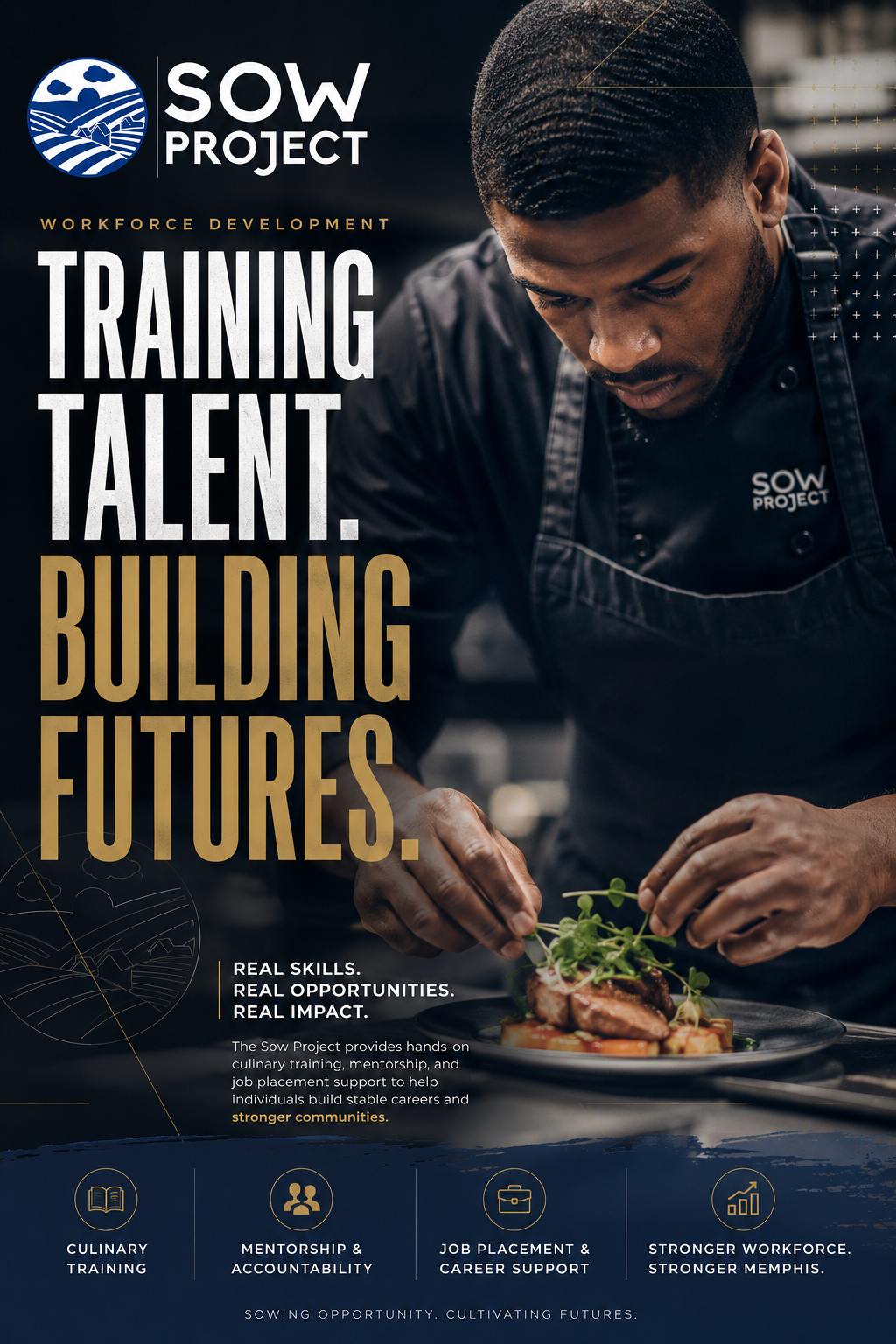
The Sow Project stands in that space with unusual clarity. It does not ask adults to carry the burden alone, and it does not confuse good intentions with outcomes. It treats workforce development as a serious economic engine and students as people worth investing in at full strength.
Adults do not need another system that tells them to wait their turn. They need one that sees their capacity, deals honestly with the barriers in front of them, and turns training into work that can hold up in real life. That is how workforce development earns trust - and how it starts changing more than one paycheck at a time.