Job Placement After Culinary Training Works
A knife roll and a certificate are not the same thing as a paycheck. For too many people, job placement after culinary training is treated like a bonus feature - something mentioned in admissions conversations, then left vague when graduation arrives. That gap matters. If training does not connect to real work, livable wages, and a clear next step, it is not a workforce solution. It is a detour.
In culinary education, the stakes are high because the students entering these programs are often not looking for enrichment. They are looking for a path. They need income, stability, and work that can grow into a career. Supporters and employers should want the same thing. Outcomes matter more than optics.
What job placement after culinary training should actually mean
A lot of programs use the phrase, but not all of them mean the same thing. Sometimes it refers to a list of employer contacts. Sometimes it means students get help polishing a resume. Sometimes it means a career office sends job alerts after graduation and calls that placement support.
That is better than nothing, but it is not enough.
Real job placement after culinary training means a program is accountable for what happens when instruction ends. It means the training was built with employers in mind, the skills match actual kitchen needs, and students are prepared for the pace, standards, and culture of professional food service. It also means someone is helping remove the barriers that often derail employment before it begins.
That last part is where many systems fail. A student can know how to break down a chicken, hold proper sanitation standards, and execute a prep list under pressure. But if they cannot afford transportation, do not have healthcare support, or are trying to choose between work gear and groceries, even strong training may not convert into stable employment.
Job placement is not just about making introductions. It is about clearing the path between skill and work.
Why placement rates alone can be misleading
Placement numbers can sound impressive, but they do not tell the whole story on their own. A graduate placed quickly into a low-wage role with no retention is not the same outcome as someone entering a kitchen job with steady hours, growth potential, and wages that support daily life.
The better question is not simply, Were students placed? It is, What kind of jobs did they get, how quickly did they get them, and were they able to stay and advance?
This is where trade-offs matter. An entry-level role is often the right first step in a culinary career. Not everyone should expect to walk into a sous chef position on day one. But there is a difference between realistic starting points and dead-end placements. A strong program is honest about that difference.
Students deserve transparency. Donors deserve measurable outcomes. Employers deserve candidates who are ready to contribute, not just eager to try.
The pieces that make placement support real
Strong culinary placement starts long before graduation. The best programs build employment into the training itself.
That means students are not only learning recipes or technique. They are learning how kitchens function. They practice punctuality, communication, knife safety, sanitation(https://www.sowproject.org/classwork/Blog , station organization, and the ability to take feedback without falling apart. They understand what employers expect because those expectations are part of the training environment, not a surprise waiting at the end.
It also means wraparound support is taken seriously. Workforce programs sometimes talk about personal barriers as if they are separate from employment. They are not. Housing instability, lack of healthcare, child care gaps, transportation costs, and financial stress all affect whether someone can accept a job, keep a job, and move up.
When a program addresses those realities directly, placement gets stronger because retention gets stronger. This is one reason nonprofit workforce models can outperform traditional tuition-driven education. They are often built around outcomes, not enrollment volume.
What students should look for before enrolling
Anyone considering culinary training should ask direct questions. Not rude questions. Necessary ones.
Ask which employers hire graduates consistently. Ask how soon graduates typically start working. Ask what roles they enter first and what wages those jobs pay. Ask whether the program offers help with transportation, uniforms, interview preparation, scheduling, and follow-up after placement.
Also ask what happens if life interrupts the training. A program that only works for people with perfect circumstances is not built for the real workforce.
This is especially important for adults changing careers or rebuilding after a setback. They do not need inspiration packaged as opportunity. They need infrastructure. If a program talks more about passion than placement, pay attention.
Culinary work can absolutely become a respected and stable profession. But the bridge between learning and earning has to be sturdy.
What employers should expect from a training partner
Restaurants, hospitality groups, institutional kitchens, and food service employers all say they need dependable talent. Fair enough. But dependable talent is not produced by chance.
If employers want better hiring outcomes, they should look for training partners who understand both the craft and the realities of employment. That includes screening candidates well, preparing them for professional expectations, and staying involved after hiring. Placement works better when the relationship is not transactional.
Employers should also be willing to examine their own side of the equation. High turnover is not always a talent pipeline problem. Sometimes it is a wage problem. Sometimes it is scheduling. Sometimes it is poor supervision. Even the strongest training program cannot place people into instability and call it success.
The best partnerships are honest on both ends. Programs prepare people thoroughly. Employers offer real opportunity. Everyone treats the work - and the worker - with seriousness.
Job placement after culinary training in a stronger workforce model
The most effective workforce programs do not separate education from employment. They connect them from day one.
That looks different from the traditional culinary school model. Instead of asking students to take on debt and hope the credential pays off later, a stronger model removes cost barriers, teaches industry-ready skills, and ties training directly to hiring outcomes. It treats students as workforce talent with value now, not as people who must first buy access to opportunity.
That distinction matters in cities like Memphis and across the broader regional labor market, where culinary talent exists but pathways are often fractured. People are ready to work. Employers need skilled staff. The missing piece is usually not motivation. It is support, structure, and a placement system with accountability.
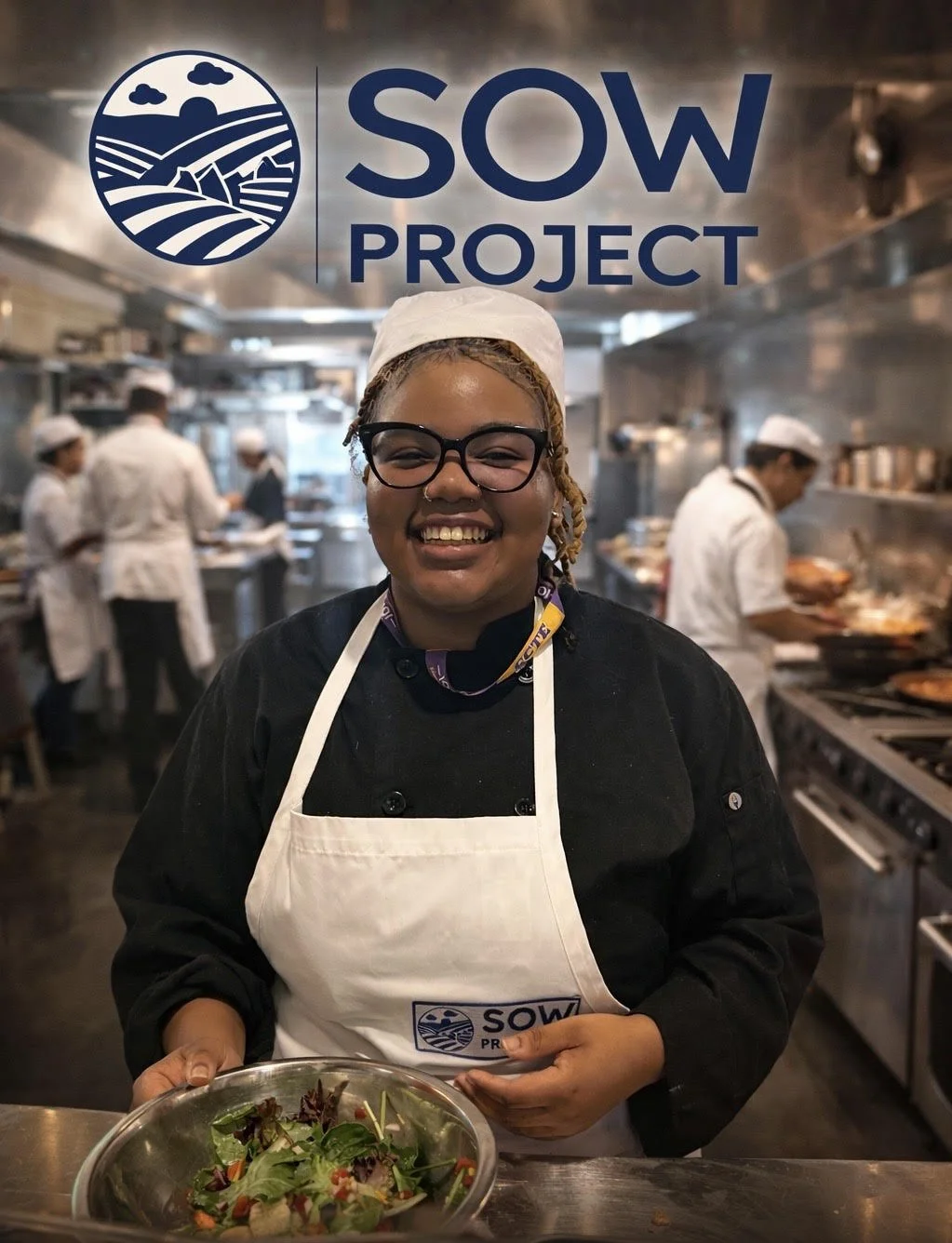
This is where The Sow Project has drawn a hard line. The work is not just to train students. It is to clear the path to employment with practical support, workplace readiness, and job placement tied to livable wages while students learn. That model respects the student and strengthens the employer pipeline at the same time.
Why dignity belongs in the placement conversation
There is a bad habit in workforce development of talking about vulnerable people as if they are mainly defined by what they lack. That mindset weakens programs because it lowers expectations and confuses charity with results.
People entering culinary training are not projects. They are future line cooks, prep cooks, bakers, stewards, kitchen leaders, and food entrepreneurs. Some need support because systems have failed them. That does not make them less capable. It makes the design of the training and placement model more important.
Dignity in this context is not soft language. It is operational. It changes how students are taught, how employers are engaged, and how success is measured. When people are treated as talent to be cultivated, programs invest differently. They build standards. They provide support without condescension. They expect excellence and make it possible.
That approach tends to produce better outcomes because it aligns respect with accountability.
The result people should demand
Job placement after culinary training should lead somewhere solid. Not just a first shift, but a foothold. Not just employment on paper, but work that can stabilize a household and build confidence over time.
For students, that means choosing programs that talk plainly about wages, hiring partners, retention, and support. For donors and community partners, it means funding models that produce measurable employment outcomes instead of vague good intentions. For employers, it means helping create jobs worth keeping.
A culinary career can begin with a prep station, an early morning shift, or a dishwasher role that opens the next door. There is dignity in every honest start. The question is whether the system around that start is built to help people move forward.
That is the standard worth holding. Training should not end at completion. It should end with a real chance to work, earn, and keep going.