What a Nonprofit Culinary Training Program Should Do
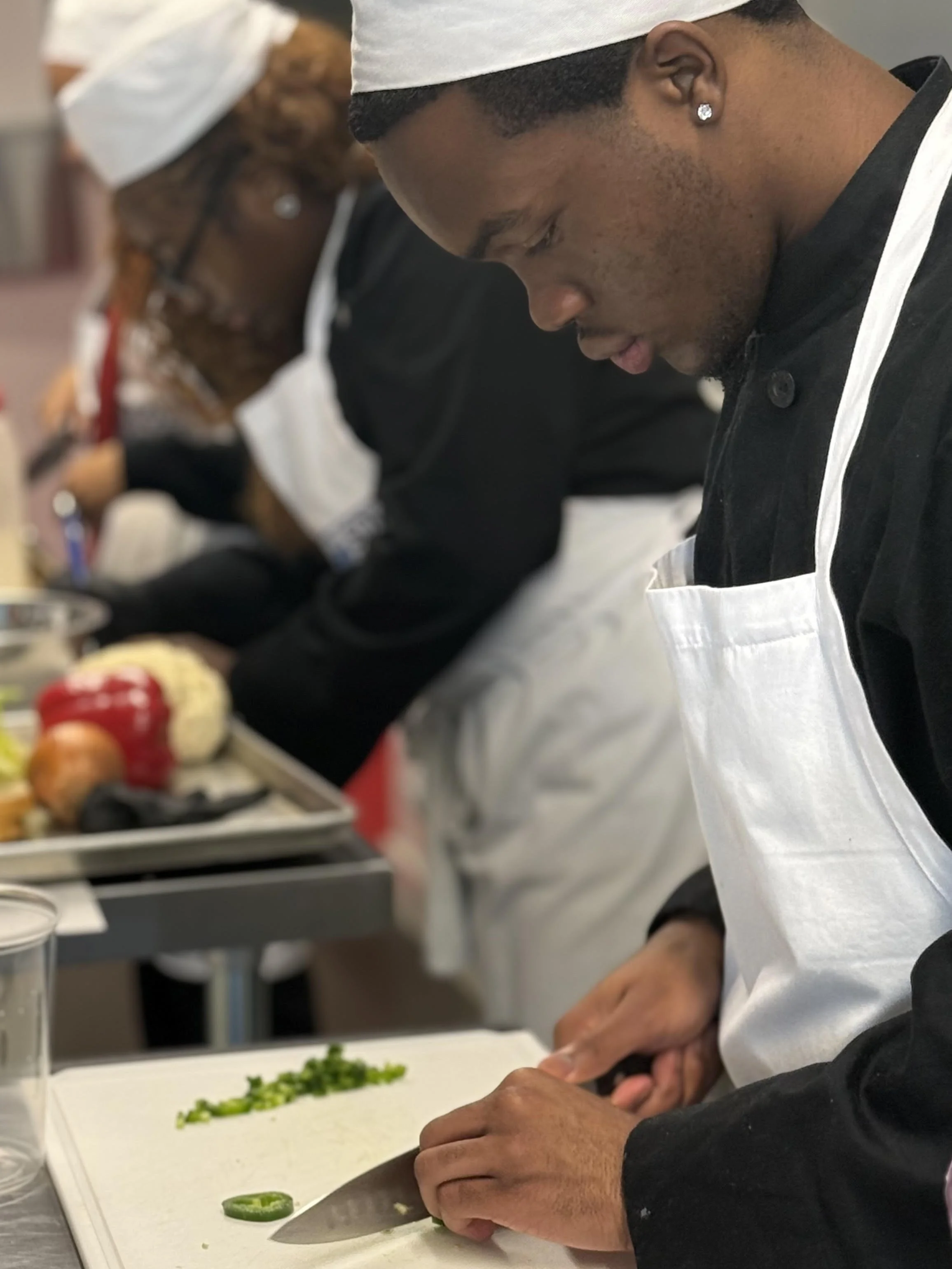
Too many workforce programs stop at education.
They teach technical skills, hand out a certificate, and leave students to figure out everything else on their own: transportation, childcare, healthcare, uniforms, housing instability, work schedules, and finding a job.
That is not workforce development. That is survival with extra steps.
A strong nonprofit culinary training program should prepare people for the realities of employment, not just the classroom. Real opportunity happens when training, support, and job placement work together in one system.
That is the difference between temporary help and long-term economic mobility.
Culinary Talent Exists Everywhere. Access Does Not.
Across Memphis and throughout the Southeast, there are thousands of adults with the work ethic, creativity, and discipline to thrive in restaurants, hospitality groups, healthcare kitchens, schools, hotels, bakeries, and food production facilities.
The problem is rarely talent.
The problem is access.
Many people never receive a real opportunity because the barriers around them become heavier than the opportunity itself. Transportation issues, unstable finances, healthcare gaps, lack of uniforms, or the inability to take on student debt can keep capable people locked out of industries that desperately need workers.
That is where a nonprofit culinary training program becomes transformative when it is built correctly.
Not as charity.
As infrastructure.
Not Every Culinary Training Program Is Built for Employment
The phrase “culinary training program” gets used broadly, but not every program is designed to move students into stable employment.
Some programs focus on enrichment.
Some offer short-term exposure to cooking.
Some help build confidence but stop short of real workforce outcomes.
Those programs still have value, but they serve a different purpose.
A workforce-centered culinary program should be measured by harder questions:
• Does the training lead directly to employment?
• Are barriers being removed for students?
• Can students graduate without debt?
• Are employer relationships active and meaningful?
• Are graduates staying employed long term?
If the answer is no, the program may still inspire people, but it is not fully solving the problem.
The strongest nonprofit workforce development programs remain accountable for what happens after graduation.
Culinary Education Has to Prepare Students for Real Kitchens
Knife skills matter.
Food safety matters.
Sanitation, timing, prep systems, and station organization all matter.
But professional kitchens require far more than technical ability.
Hospitality is built on consistency, communication, emotional control, teamwork, accountability, and stamina. Students must learn how to function inside high-pressure environments while maintaining professionalism and discipline.
That is why real culinary workforce training combines craft with workplace readiness.
Students should leave knowing how to:
• Work clean and organized
• Handle pressure during service
• Communicate with a team
• Accept feedback professionally
• Solve problems in real time
• Show up consistently
• Understand workplace expectations
• Operate with confidence in professional kitchens
Cooking can be taught.
Reliability, discipline, and confidence are developed through repetition, mentorship, and structure.
Barrier Removal Is Not Extra Support. It Is the Work.
Too many education systems still operate as if success begins and ends in the classroom.
Real life does not work that way.
A student can be motivated, talented, and fully committed and still fail because they cannot afford transportation, healthcare, uniforms, books, or time away from unstable work.
When programs ignore those realities, they unintentionally filter out the people who need opportunity most.
That is why wraparound services matter.
A serious nonprofit culinary training program should help remove the barriers standing between students and employment.
That includes support systems like:
• Free tuition
• Uniforms and kitchen tools
• Textbooks and supplies
• Financial literacy support
• Career coaching
• Healthcare partnerships
• Transportation assistance
• Apprenticeship opportunities
• Direct employer pathways
That is not hand-holding.
That is workforce infrastructure designed to create measurable outcomes.
Job Placement Is the Real Standard
Every workforce program talks about transformation.
Students and employers need something more concrete.
They need jobs.
A culinary training program gains credibility when it becomes accountable for employment outcomes, not just classroom participation.
Strong employer partnerships matter because they create direct hiring pathways for students entering the workforce. They also help align training with the real needs of restaurants, hotels, hospitals, catering companies, and hospitality groups.
But placement numbers alone are not enough.
The goal is not simply to place students into any job. The goal is placement into stable employment with livable wages, advancement opportunities, and long-term growth potential.
That distinction matters.
Workforce development should create momentum, not temporary placement statistics.
Why Debt-Free Culinary Training Changes Lives
Traditional culinary school works for some students.
For many others, it creates financial pressure that follows them for years after graduation.
That burden can become overwhelming in an industry where entry-level wages often do not support large student loan payments.
Debt-free culinary education changes the equation entirely.
Students can focus on learning the craft, building discipline, and entering the workforce without carrying another monthly payment into an already difficult economy.
For adult learners and working families, that matters deeply.
Education decisions affect rent, groceries, childcare, transportation, and household stability. Free culinary job training acknowledges that reality instead of ignoring it.
In Memphis and across the Southeast, workforce models that reduce debt while increasing employment outcomes can create long-term economic impact for both families and employers.
What Students, Donors, and Employers Should Ask
Whether you are a student considering enrollment, an employer looking for workforce partners, or a donor deciding where to invest, ask direct questions.
• What jobs do graduates actually receive?
• What are the starting wages?
• Does the program provide wraparound support?
• Are students graduating debt free?
• Are employer relationships active?
• Does the program track long-term retention?
• What happens when students struggle midway through training?
Strong programs should answer those questions clearly and confidently.
Good intentions alone are not enough.
Outcomes matter.
Why The Sow Project Model Matters
The Sow Project was built around a simple idea:
People should not have to choose between survival and education.
The model combines free culinary workforce training with direct employment pathways, apprenticeship opportunities, wraparound services, mentorship, and real-world kitchen experience.
Students receive support that includes:
• Free tuition
• Uniforms and textbooks
• Hands-on culinary instruction
• Workforce readiness training
• Financial literacy support
• Healthcare access through partnerships
• Apprenticeship opportunities
• Direct job placement pathways
The mission is not simply to teach cooking.
The mission is to help people enter the workforce with skill, confidence, stability, and long-term opportunity.
The Sow Project believes workforce development should restore dignity while creating measurable economic outcomes for students, families, employers, and communities.
The Bigger Future of Workforce Development
Food work powers cities.
Restaurants, hospitals, hotels, schools, and hospitality groups depend on skilled people showing up every day prepared to work.
The workforce systems supporting those industries should reflect the value of the people inside them.
At its best, a nonprofit culinary training program becomes more than education. It becomes a bridge between untapped talent and long-term employment.
It creates economic mobility people can actually feel:
• Stable wages
• Consistent employment
• Confidence
• Routine
• Growth
• Dignity
People do not need empty promises wrapped in motivational language.
They need real opportunity built strongly enough to support real life.
That is where the future of workforce development begins.