Culinary School Without Tuition:
A Better Path Into the Food Industry
A lot of people can picture themselves working in a professional kitchen. Far fewer can picture how they could ever afford the training to get there. That is exactly why tuition-free culinary education matters.
For many aspiring cooks, the biggest barrier is not talent. It is not discipline. It is cost.
Traditional culinary schools often ask students to take on significant debt before they have earned their first paycheck in the industry. For adults trying to build stability, support families, or change careers, that model can feel impossible. When education creates financial strain before employment even begins, the pathway into hospitality becomes crowded with risk.
A growing number of workforce-driven culinary programs are changing that equation by removing tuition and focusing on what actually helps students succeed long term: practical training, employment access, and support systems built around real life.
What Tuition-Free Culinary School Actually Means
The best tuition-free culinary programs are not watered-down versions of professional education. They are structured differently from the ground up.
The goal is not simply to eliminate classroom costs. The goal is to remove barriers that keep capable people from entering the workforce.
That distinction matters.
Some programs may waive tuition but still leave students responsible for uniforms, knives, books, certifications, transportation, or unpaid training hours that make participation difficult. Stronger workforce-centered programs understand that opportunity only works when students can realistically complete the process.
A serious tuition-free culinary school should answer more than one question:
Can students afford to attend?
Can they consistently get there?
Can they finish the program without sacrificing rent, groceries, childcare, or healthcare?
Can they move directly into stable employment after graduation?
When those questions are addressed together, culinary training becomes more than education. It becomes a sustainable workforce pathway.
Why Cost Is Only Part of the Problem
Most people do not leave the culinary industry because they lack passion or work ethic. They leave because the path into the industry can demand too much upfront while offering too little stability in return.
Tuition is only one expense.
Students may also need kitchen tools, work-ready clothing, transportation, childcare, healthcare access, career coaching, or schedule flexibility to complete training successfully. When programs ignore those realities, even “free” education can become difficult to sustain.
Traditional educational models often treat culinary instruction like a product: pay for classes, receive instruction, then figure out the rest on your own.
That approach may work for someone with savings, support systems, and flexible time. It works far less effectively for adults rebuilding after layoffs, supporting children, navigating financial hardship, or trying to improve their lives without taking on debt.
The strongest culinary workforce programs understand that support services are not extras. They are infrastructure.
Real Kitchen Training
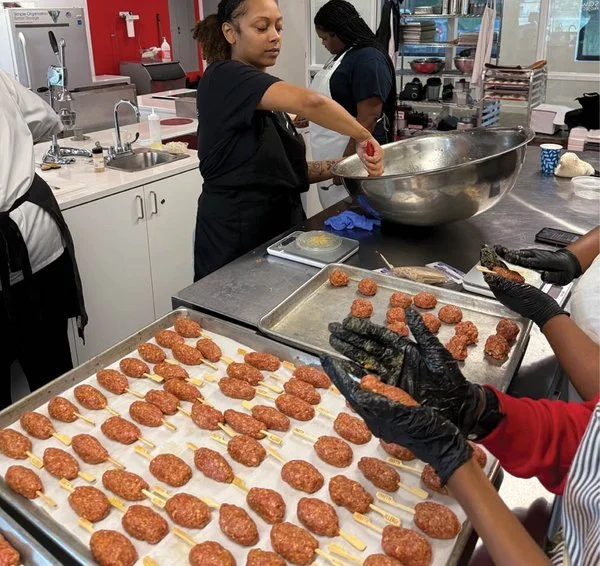
Students should learn in environments that reflect actual food service operations.
That means more than recipes. Strong culinary training develops knife skills, sanitation practices, prep systems, timing, communication, teamwork, consistency, and the ability to work under pressure.
Restaurants hire people who can perform reliably in real kitchens, not just pass classroom exercises.
Programs that mirror professional kitchen standards prepare students more effectively for immediate employment.
Support Beyond the Classroom
This is often where workforce-centered programs separate themselves from traditional education.
Students succeed at higher rates when programs provide practical support systems such as:
Uniforms and kitchen tools
Transportation assistance
Financial literacy education
Career coaching
Healthcare access through partnerships
Interview preparation
Workplace readiness support
These services directly improve retention, graduation rates, and employment outcomes because they help students stay focused on training instead of constantly managing instability.
Direct Employment Pathways
A certificate alone is not enough.
The strongest tuition-free culinary programs maintain relationships with restaurants, hospitality groups, employers, and workforce partners that actively hire graduates.
Students should understand exactly how the transition into employment works before enrolling.
Questions worth asking include:
Does the program provide job placement support?
Are employer partnerships already established?
Is interview preparation included?
Are graduates placed directly into kitchens or hospitality operations?
A culinary education becomes far more valuable when it connects directly to wages, advancement opportunities, and long-term career growth.
Who Benefits Most From Tuition-Free Culinary Education
Tuition-free culinary programs help people with talent access industries they may otherwise never enter.
That includes:
Adults changing careers
Young workers seeking a first serious opportunity
Parents returning to the workforce
Individuals impacted by financial hardship
Workers rebuilding after layoffs
Students unable to afford traditional education
It also benefits employers who need dependable, trained hospitality talent and communities that grow stronger when more residents gain access to livable wages and long-term employment.
For many students, tuition-free culinary training is not charity. It is access.
That difference matters.
People do not need to be rescued into careers. They need fair opportunities, strong training, practical support, and a system designed to help them succeed.
Understanding the Trade-Offs
Not every tuition-free culinary program will fit every student.
Some programs are selective. Some focus heavily on workforce readiness rather than advanced culinary theory. Others operate within specific regions or employer networks. Certain schedules may also be difficult for students already working full time.
That does not make those programs weaker. It simply means alignment matters.
Someone pursuing high-level fine dining leadership may eventually seek additional specialization, mentorship, or years of advanced restaurant experience. Someone seeking stable employment and career growth in hospitality may benefit tremendously from a workforce-focused training model.
The right program depends on where a student is starting and where they hope to go.
Prestige is not the only measure of value. Outcomes matter too.
Why Workforce-Based Culinary Training Is Growing
Programs centered around workforce development create a stronger alignment between students, employers, and communities.
Students gain skills and employment opportunities.
Restaurants gain trained workers.
Communities benefit when people move into stable jobs without accumulating overwhelming debt.
That is why organizations like The Sow Project are building alternative models for culinary education. By removing tuition barriers, offering wraparound support, and connecting training directly to employment opportunities, workforce-driven programs create measurable outcomes that extend far beyond the classroom.
For donors, workforce boards, schools, and community partners, that investment becomes easier to understand because the return is tangible: stronger employment pipelines, economic mobility, and long-term workforce stability.
Questions To Ask Before Applying
Before enrolling in any tuition-free culinary program, students should ask detailed questions about outcomes and expectations.
Important questions include:
What costs are fully covered?
Are uniforms, books, and tools included?
What percentage of students complete the program?
How many graduates move into employment?
What support exists if personal challenges arise during training?
Is there direct job placement assistance?
Will I gain real kitchen experience?
The answers reveal whether a program is designed for lasting transformation or simply short-term enrollment.
The larger conversation is not simply about free school.
It is about building honest, effective pathways into meaningful work.
If financial barriers, healthcare gaps, transportation issues, and weak hiring pipelines prevent talented people from entering the hospitality industry, those problems are not secondary concerns. They are central to the future of workforce development.
The strongest tuition-free culinary programs recognize the full picture.
Skill matters.
Support matters.
Employment matters.
When all three work together, culinary education becomes more than training. It becomes momentum.
And for people standing at the edge of the industry wondering whether the opportunity is truly within reach, that is the standard worth looking for: not just a classroom seat, but a pathway that still holds value long after graduation.