Safety & Sanitation
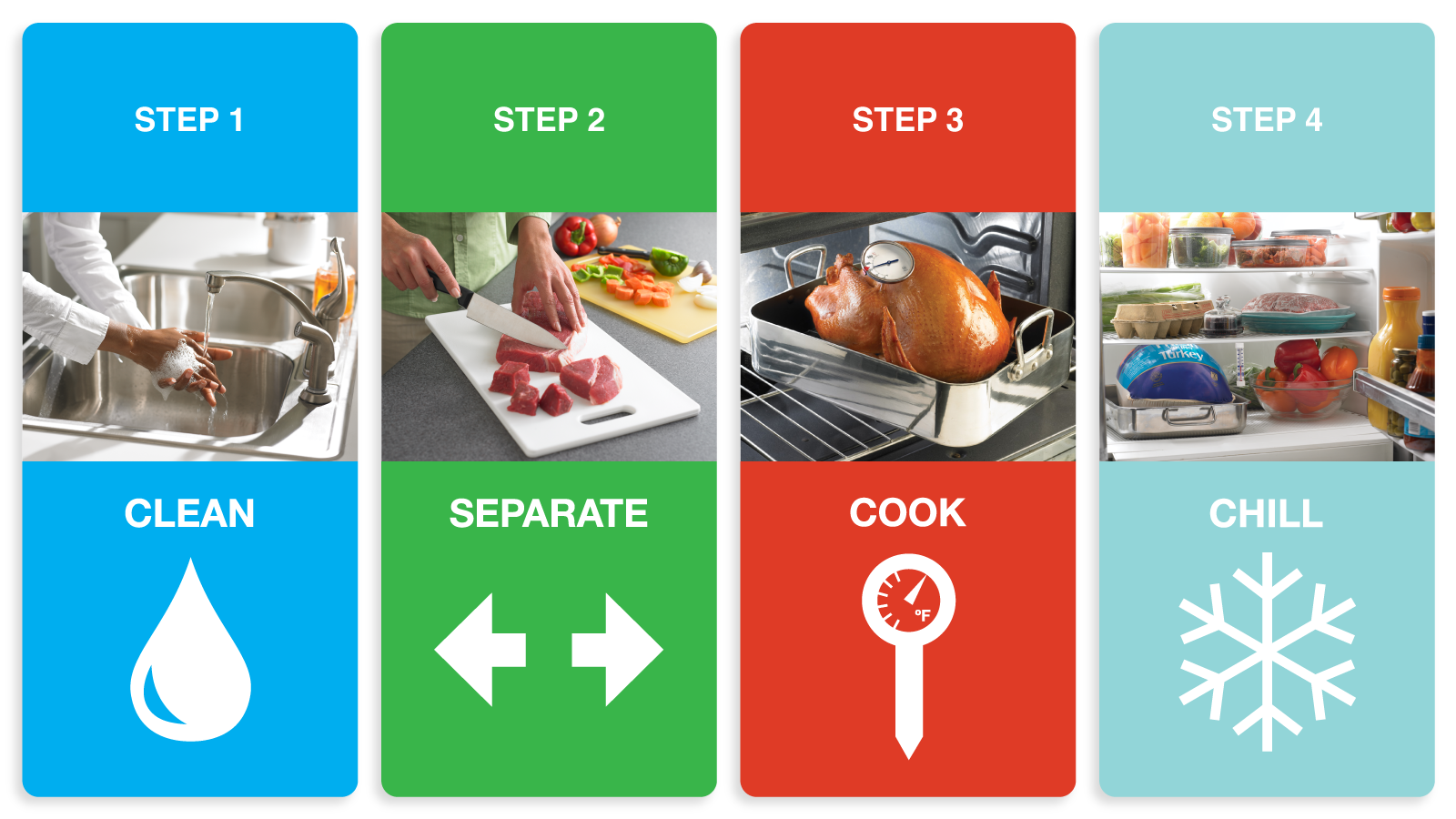
DURATION
LEVEL
5 hours / 300 minutes
Culinary 101
THE SOW PROJECT
3. Instructor Lesson Plan
Module 1 — Food Safety Foundations | 50 minutes
Open with a simple fact: safe food must be protected through the entire flow of food. One bad decision can undo hours of correct work. Ask students to name the people most likely to suffer severe illness: older adults, preschool-age children, people with weakened immune systems, and others who are medically vulnerable.
Foodborne illness is an illness carried or transmitted through food. An outbreak generally means two or more people experience a similar illness after eating a common food and an investigation identifies that food as the source.
Four hazard categories: biological (pathogens), chemical (cleaners, pesticides, toxic metals), physical (glass, metal, hair, bone), and allergen hazards.
TCS means time/temperature control for safety. Common examples include meat, poultry, seafood, eggs, milk, cooked rice/pasta/vegetables, tofu/soy protein, cut melons, cut tomatoes, cut leafy greens, sprouts, and garlic-in-oil mixtures unless modified for safety.
The temperature danger zone is 41°F to 135°F. The longer TCS food remains there, the greater the opportunity for pathogen growth.
Activity: Hazard sort
Call out kitchen situations and have students stand in one of four areas—biological, chemical, physical, or allergen. Require each student to name the control: discard, separate, label, wash, sanitize, heat, cool, or report.
CHECK FOR UNDERSTANDING A student can name the hazard and the preventive action—not simply identify that something is ‘unsafe.’
Module 2 — Personal Hygiene & Employee Health | 35 minutes
Wash hands at a designated hand sink with running water, soap, vigorous scrubbing, thorough rinsing, and single-use drying. The full process should take at least 20 seconds; scrub hands and arms for 10–15 seconds.
Wash before starting work; after restroom use; after touching the body, hair, face, phone, clothing, dirty equipment, trash, chemicals, raw animal food, or money; after eating, drinking, coughing, sneezing, smoking, or taking a break; and before putting on gloves or changing tasks.
Gloves never replace handwashing. Change gloves when torn, dirty, after handling raw food, before ready-to-eat food, after interruption, and at least whenever the task changes.
Keep nails clean and short; restrain hair; wear clean clothing and apron; cover an infected hand wound with an impermeable bandage and single-use glove.
Employees must report vomiting, diarrhea, jaundice, sore throat with fever, infected wounds, and diagnosed foodborne illnesses to the person in charge. The person in charge applies the establishment policy and regulatory restriction/exclusion rules.
Lab: Handwashing and glove-change relay
Student states why handwashing is required.
THE SOW PROJECT | CULINARY FOUNDATIONS
Student wets hands and lower arms, applies soap, scrubs all surfaces including nails and between fingers, rinses, and dries with a single-use towel.
Student uses the towel to avoid recontaminating hands where needed, then puts on gloves without touching a contaminated surface.
Instructor introduces a task change; student removes gloves correctly, washes again, and dons new gloves.
NON-NEGOTIABLE A hand sink must remain accessible and supplied. Never use it for food prep, dumping drinks, thawing food, or storing equipment.
Module 3 — Cross-Contamination & Allergens | 45 minutes
Separate raw animal foods from ready-to-eat food during receiving, storage, prep, cooking, and service. Use separate equipment or clean and sanitize between uses.
Store food by minimum required cooking temperature: ready-to-eat food on top, then seafood/whole cuts, ground meat, and poultry at the bottom. Local policy may separate categories further; raw poultry never belongs above ready-to-eat food.
Do not touch ready-to-eat food with bare hands. Use gloves, deli sheets, tongs, spatulas, or other approved utensils.
Cross-contact is the transfer of an allergen to food that should not contain it. Cleaning, fresh gloves, clean utensils, verified ingredients, and honest communication are required—never promise an allergen-free meal unless the operation can truly control the risk.
Nine major U.S. allergens: milk, eggs, fish, crustacean shellfish, tree nuts, peanuts, wheat, soybeans, and sesame. Treat every allergy statement seriously and involve the person in charge.
Team challenge: Build the safe cooler
EXAMPLES
WHY
Ready-to-eat / cooked
Salad, cooked chicken, desserts
No further kill step
Lower cooking temperature
Seafood; whole cuts of beef/pork
Keep below ready-to-eat food
Higher cooking temperature
Ground meat; mechanically tenderized items
Greater handling increases risk
Highest cooking temperature
Poultry; stuffed foods
Store at bottom to contain drips
Module 4 — Time & Temperature Control | 50 minutes
Core numbers students must know
CONTROL
STANDARD
Cold holding
41°F or lower
Hot holding
135°F or higher
Danger zone
41°F–135°F
Cooling stage 1
135°F to 70°F within 2 hours
Cooling total
135°F to 41°F within 6 total hours
Reheat for hot holding
165°F for 15 seconds within 2 hours
THE SOW PROJECT | CULINARY FOUNDATIONS
Date marking
Ready-to-eat TCS held over 24 hours: maximum 7 days at 41°F or lower; prep/open day is Day 1
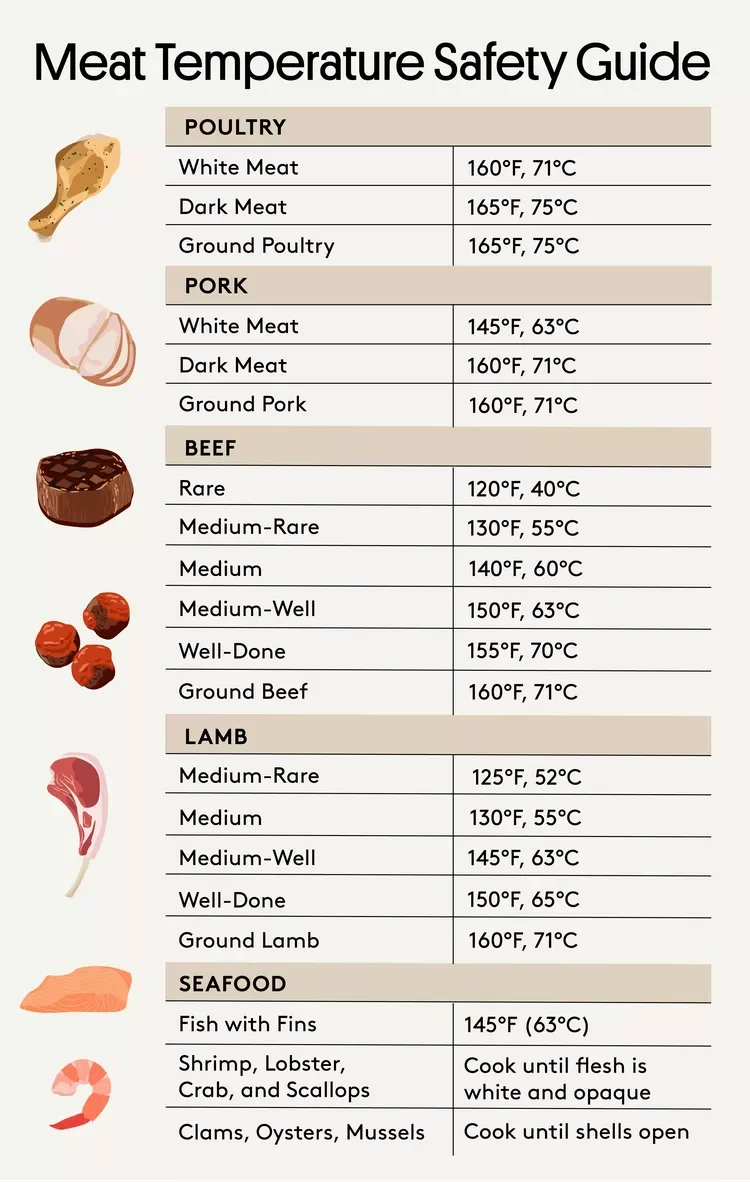
Use the establishment’s approved cooking-temperature chart and current ServSafe materials. For this 101 class, reinforce the common minimums below; when a product, recipe, regulatory variance, or local policy requires a stricter control, follow the stricter control.
FOOD
COMMON MINIMUM INTERNAL TEMPERATURE
Poultry; stuffing; stuffed meat/seafood/pasta; dishes containing previously cooked TCS ingredients
165°F for 15 seconds
Ground meat; injected/mechanically tenderized meat; ratites; shell eggs for hot holding
155°F for 17 seconds
Seafood; steaks/chops; shell eggs for immediate service
145°F for 15 seconds
Roasts
Use approved time-and-temperature schedule
Fruits, vegetables, grains, legumes for hot holding
135°F
Thermometer lab
Wash, rinse, sanitize, and air-dry the probe before use and between foods.
Prepare an ice-water slurry; keep the sensing area submerged without touching the cup.
Wait for the reading to stabilize. Adjust an adjustable thermometer to 32°F; document corrective action if it cannot be adjusted.
Measure food in the thickest part; for thin food, insert from the side. Take at least two readings in different places.
Record the result and decide: accept, continue cooking, rapidly cool, reheat, move to proper holding, or discard.
MANAGER HABIT Check holding temperatures at least every four hours. Checking every two hours creates time for corrective action.
Module 5 — The Flow of Food | 45 minutes
Receiving and storage
Buy only from approved, lawful suppliers. Inspect deliveries at the time they arrive and reject unsafe, damaged, contaminated, adulterated, pest-damaged, or temperature-abused food.
Check product temperature with the correct method—not only truck air or package surface temperature. Reject cans with severe dents at seams, swelling, leaks, rust, or damaged seals.
Label working containers. Store food clean, dry, protected from splash, and generally at least 6 inches above the floor. Keep chemicals separate and below food and food-contact items.
Use FIFO as an inventory tool, but date-marking and safety limits control disposition. Never relabel old food to create a new Day 1.
Preparation, cooking, cooling, reheating
Thaw under refrigeration at 41°F or lower; completely submerged under running water at 70°F or lower under required conditions; in a microwave if immediately cooked; or as part of cooking.
Minimize the amount of food removed from temperature control. Use small batches and return ingredients to refrigeration promptly.
Cool in shallow pans, smaller portions, ice baths, rapid-cooling equipment, heat-transfer containers, or with ice as an ingredient. Do not place a deep covered stockpot in the walk-in and assume it will cool safely.
THE SOW PROJECT | CULINARY FOUNDATIONS
Reheat food for hot holding rapidly to 165°F for 15 seconds within 2 hours. Commercially processed ready-to-eat food for hot holding must reach at least 135°F.
Scenario drill
At 4:00 p.m., chili measures 118°F after being placed on a steam table at 2:30 p.m. Students must ask when it was cooked/reheated, review the temperature log, identify the broken control, and state the corrective action. Emphasize: never guess, smell, or ‘cook around’ missing safety information.
Module 6 — Cleaning, Sanitizing & Chemical Safety | 35 minutes
Cleaning removes food and soil. Sanitizing reduces pathogens on a cleaned food-contact surface to safe levels. A dirty surface cannot be effectively sanitized.
Food-contact surfaces must be washed, rinsed, sanitized, and air-dried. Do not towel-dry sanitized equipment.
Clean and sanitize after each task; when changing from raw animal food to ready-to-eat food; between allergen tasks; after interruption or contamination; and at least every four hours when continuously used with TCS food, unless an approved exception applies.
Mix sanitizer exactly according to the product label. Use the correct test strip, check concentration, temperature, and contact time, and replace solution when dirty or out of range.
Store chemicals in original or properly labeled working containers, away from food, equipment, utensils, linens, and single-use items. Never mix chemicals.
Lab: Three-compartment sink
Scrape or pre-rinse items; keep dirty and clean flow separated.
Wash in correctly prepared detergent solution.
Rinse in clean water.
Sanitize using label-required concentration, temperature, and contact time; verify with the correct test strip.
Air-dry upside down or in a position that drains; store protected.
REMEMBER Wash → Rinse → Sanitize → Air-dry. The label on the chemical determines the legal concentration and contact time.
Module 7 — Health Inspection Readiness | 15 minutes
Explain that Shelby County’s Environmental Health and Food Safety Program handles restaurant inspections, permits, plan reviews, complaints, and related enforcement. An inspection is a snapshot of the operation, but food safety must be continuous. The person in charge should cooperate, answer accurately, produce required records, correct violations when possible, and protect food immediately.
Five-minute inspection walk
Pairs inspect one assigned zone: receiving/storage, cold line, cook line, dish area, or employee practices.
Each pair reports one priority risk, the public-health reason, the immediate correction, and the prevention step.
Instructor confirms all staged violations are found and physically corrected.
INSPECTOR-READY CHECK
WHAT GOOD LOOKS LIKE
Person in charge
Present, knowledgeable, active managerial control
Employee health
Reporting policy understood; sick employees handled correctly
THE SOW PROJECT | CULINARY FOUNDATIONS
Hands and hand sinks
Correct washing; stocked, accessible hand sinks
Food temperatures
Calibrated thermometer; logs and corrective actions
Protection from contamination
Safe storage order; no bare-hand RTE contact; chemicals controlled
Cleaning and sanitizing
Correct setup, test strips, clean food-contact surfaces
Facility controls
Food off floor; pest evidence addressed; waste and plumbing controlled
Records
Permit/inspection posting and required plans, tags, labels, logs available
4. Student Knowledge Check
Name: __________________________________ Date: __________________ Score: ______ / 20
1. What does TCS mean, and why does it matter?
________________________________________________________________________________
2. List the four types of food-safety hazards taught today.
________________________________________________________________________________
3. What is the temperature danger zone?
________________________________________________________________________________
4. State the minimum cold-holding and hot-holding temperatures.
________________________________________________________________________________
5. When must a food handler wash hands before putting on gloves?
________________________________________________________________________________
6. Name three symptoms that must be reported to the person in charge.
________________________________________________________________________________
7. Where should raw poultry be stored in relation to ready-to-eat food?
________________________________________________________________________________
8. What is the difference between cross-contamination and allergen cross-contact?
________________________________________________________________________________
9. Name all nine major food allergens.
________________________________________________________________________________
10. What is the required two-stage cooling rule?
________________________________________________________________________________
11. How hot must previously cooked TCS food be reheated for hot holding, and within what time?
________________________________________________________________________________
12. How long may properly refrigerated, ready-to-eat TCS food be held when date marking is required?
________________________________________________________________________________
13. Put these in order: sanitize, air-dry, wash, rinse.
________________________________________________________________________________
14. Why must sanitizer test strips be used?
________________________________________________________________________________
15. Give two approved methods for thawing TCS food.
________________________________________________________________________________
16. What should you do with a severely swollen can?
________________________________________________________________________________
17. How far above the floor is food generally required to be stored?
________________________________________________________________________________
18. Why are two thermometer readings better than one?
________________________________________________________________________________
19. A cook touches a phone while wearing gloves. What happens next?
________________________________________________________________________________
20. Name one immediate correction and one long-term prevention step for an unlabeled chemical spray bottle.
________________________________________________________________________________