Mother Sauce
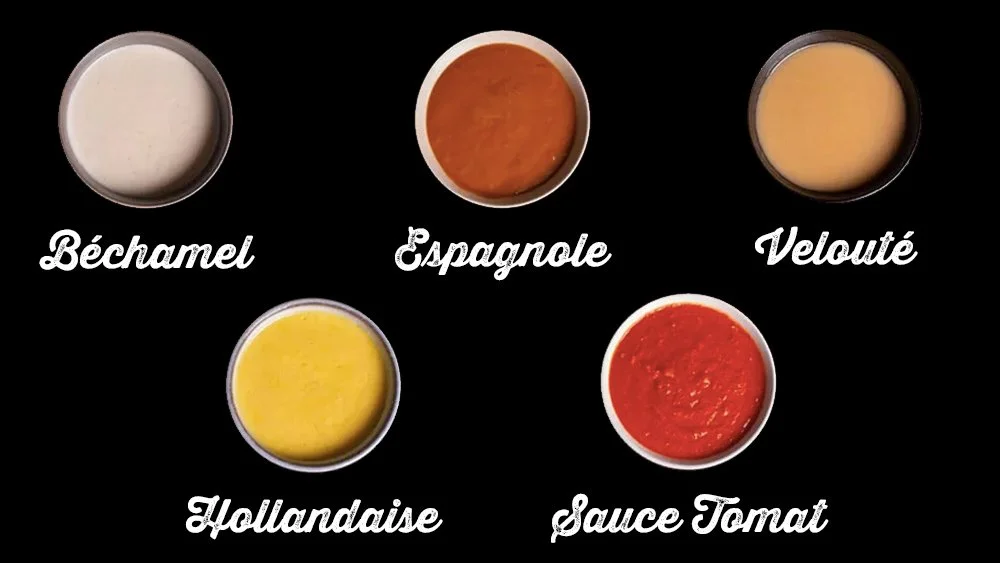
THE MOTHER SAUCES
A Deep-Dive Culinary Curriculum
Course Purpose:
The Mother Sauces are not five recipes to memorize. They are five systems for understanding sauce making.
A cook who understands these systems understands:
• Roux
• Starch gelatinization
• Reduction
• Stocks and fonds
• Mirepoix
• Deglazing
• Emulsification
• Temperature control
• Fat management
• Acid balance
• Seasoning
• Concentration
• Texture
• Derivative sauces
• Sauce-to-food relationships
The objective of this curriculum is not simply to produce five acceptable sauces. The objective is to develop the ability to look at a liquid, understand what it needs, choose an appropriate thickening or binding method, control the cooking process, correct problems, and build a finished sauce intentionally.
PART I — WHAT IS A MOTHER SAUCE?
A mother sauce is a foundational sauce from which other sauces can be developed.
The classical system organizes sauces according to their primary liquid, thickening method, and technique.
The five generally recognized mother sauces are:
• Béchamel — milk; white roux
• Velouté — white stock; white/blond roux
• Espagnole — brown stock; brown roux, aromatics, and reduction
• Tomato — tomato, aromatics, and reduction; historical formulations may include roux
• Hollandaise — butter and egg yolk; warm emulsion
Four of the five are commonly taught through roux-based systems; Hollandaise is fundamentally different because it is a warm egg-based emulsion. Tomato sauce is also important to teach carefully: contemporary tomato sauces do not necessarily require roux because tomatoes themselves provide body through their solids and reduction.
The distinction matters: students should learn the principle, not simply memorize a recipe.
PART II — THE HISTORY OF THE SYSTEM
Before the Mother Sauces
Sauce making predates the modern French culinary system by centuries. The modern concept developed from a long evolution of European culinary technique. French chefs eventually began organizing sauces into families.
Antonin Carême
In the nineteenth century, Antonin Carême developed a system of foundational sauces that organized classical French sauce making. His system was not identical to the five sauces taught today.
Auguste Escoffier
Auguste Escoffier later reorganized classical French cuisine and established the five-sauce framework most culinary students recognize today: Béchamel, Velouté, Espagnole, Tomato, and Hollandaise.
The classification changed over time. It is a culinary framework, not a law of nature.
PART III — THE ANATOMY OF A SAUCE
Before studying individual sauces, students need to understand what a sauce does.
Moisture: A sauce can add moisture to a dry or lean food.
Fat: Fat carries flavor and contributes richness and mouthfeel.
Acid: Acid provides brightness and prevents rich dishes from becoming heavy.
Salt: Salt amplifies and balances flavor.
Aromatics: Herbs, spices, vegetables, wine, garlic, shallots, and other aromatics establish identity.
Texture: A sauce can be thin, thick, glossy, creamy, silky, sticky, or emulsified.
Temperature: A sauce can be served hot, warm, room temperature, or cold.
Contrast: The best sauce is not necessarily the richest sauce. It is the sauce that creates the right
relationship between the food and the sauce.
PART IV — THICKENING SYSTEMS
The first major technical concept in this curriculum is how sauces become thick. There are several mechanisms.
1. Starch: Flour, cornstarch, potato starch, and other starches thicken liquid through gelatinization. When starch is heated in the presence of water, the granules absorb water, swell, and contribute to thickening.
2. Reduction: Reduction thickens by removing water through evaporation. The liquid becomes more concentrated. Reduction also concentrates salt, acidity, sweetness, aromatics, and savory compounds.
3. Emulsification: An emulsion combines ingredients that normally separate, such as fat and water. Hollandaise is the major mother-sauce example.
4. Protein: Egg proteins can thicken liquids when heated carefully. This becomes critical in Hollandaise.
5. Purée: Vegetables, legumes, nuts, and other ingredients can provide body without traditional starch thickening.
PART V — ROUX
The Most Important Technique in the Curriculum
A roux is a mixture of fat and flour cooked together. The classical roux technique is fundamental to Béchamel, Velouté, Espagnole, many derivative sauces, soups, gravies, and casseroles.
Why Make a Roux?
Cooking flour in fat distributes the flour particles through the fat. When liquid is introduced, the flour's starch can hydrate and gelatinize, producing a thickened sauce.
The Three Classical Roux Stages
White roux: Cooked only long enough to remove the raw flour character. Used primarily for Béchamel.
Blond roux: Cooked longer, developing a pale golden color and more developed flavor. Used primarily for Velouté.
Brown roux: Cooked substantially longer, developing brown color and nutty, toasted flavor. The tradeoff is reduced thickening power.
Color is therefore a technical tradeoff: more browning produces more flavor but less thickening power.
Roux Lab
Students make three rouxs side by side: white, blond, and brown. They record color, aroma, texture, cooking time, flavor, and thickening performance.
Adding Liquid to Roux
One of the most common sauce failures is lumping. Control the relative temperatures of roux and liquid, incorporate liquid progressively, and whisk continuously during incorporation.
Roux Troubleshooting
Lumpy: Possible causes include liquid added too quickly, insufficient whisking, or poor temperature management. Whisk and strain if necessary.
Raw flour flavor: The flour was not cooked sufficiently. Continue cooking the sauce appropriately.
Too thick: There may be too much flour, too little liquid, or excessive reduction. Gradually add liquid while whisking.
Too thin: There may be insufficient thickener or insufficient cooking. Reduce or adjust the thickening method.
PART VI — BÉCHAMEL
The White Sauce
Béchamel is a milk-based sauce thickened with a white roux.
Basic structure: milk + butter + flour + seasoning.
Béchamel is one of the clearest ways to teach the relationship between liquid, starch, and heat.
Classical Foundation
• Liquid: milk
• Thickener: white roux
• Aromatics: often onion, bay, clove, nutmeg, or similar classical aromatics
• Seasoning: salt and appropriate pepper/spice
Technique
1. Prepare the white roux.
2. Heat the milk.
3. Incorporate the milk gradually.
4. Whisk continuously.
5. Bring to a controlled simmer.
6. Cook until the flour is fully hydrated and the desired consistency is reached.
7. Strain if necessary.
8. Season.
9. Evaluate texture.
What Students Must Learn
• Smooth
• Cohesive
• Creamy
• Properly seasoned
• Free of raw flour flavor
• Appropriate for its intended use
Consistency
The correct consistency depends on application. A sauce for plated vegetables may be thinner; a sauce intended for lasagna or a baked gratin may need more body. There is no single correct thickness independent of application.
Béchamel Derivatives
Mornay: Béchamel + cheese. Common applications include macaroni and cheese, Croque Monsieur, vegetables, gratins, and pasta.
Mustard sauce: Béchamel + mustard.
Soubise: Béchamel combined with cooked onion.
Béchamel Practical Exam
Students prepare a basic Béchamel, a cheese derivative, and a finished dish using the derivative. They must explain their roux color, final consistency, cheese selection, and seasoning decisions.
PART VII — VELOUTÉ
The Stock-Based Sauce
Velouté replaces Béchamel's milk with a light stock.
Basic structure: white stock + blond roux.
Common stocks include chicken, veal, and fish.
The Key Difference
Béchamel asks what milk can become. Velouté asks what stock can become. That makes stock quality critical. If the stock is weak, the sauce will be weak.
Stock Quality
White stock is generally made without roasting the bones, producing a lighter-colored stock. Brown stock involves browning bones and/or vegetables before stock production, developing darker color and deeper roasted flavor.
Velouté Technique
1. Prepare blond roux.
2. Prepare the appropriate stock.
3. Combine carefully.
4. Whisk.
5. Bring to a controlled simmer.
6. Skim if necessary.
7. Reduce.
8. Strain.
9. Adjust seasoning.
10. Adjust consistency.
Velouté Derivatives
Suprême: chicken velouté + cream.
Allemande: classically, a veal velouté enriched with egg yolk and cream and finished with appropriate acid and seasoning.
Velouté Lab
Prepare chicken velouté, then create a mushroom velouté and a cream-enriched poultry sauce. Compare the effects of reduction, cream, mushrooms, acid, and salt.
PART VIII — ESPAGNOLE
The Brown Mother Sauce
Espagnole represents a major jump in complexity.
Basic classical structure: brown stock + brown roux + mirepoix + tomato + aromatics.
The sauce is designed around depth.
Mirepoix
The classic foundation is onion + carrot + celery. A traditional proportion often taught is approximately 2 parts onion to 1 part carrot to 1 part celery. Mirepoix creates an aromatic foundation
rather than dominating the finished sauce.
Browning
Browning changes flavor. Students must learn the difference between controlled browning, which develops desirable roasted flavors, and burning, which produces bitterness and degradation.
Espagnole Technique
1. Prepare brown stock.
2. Prepare brown roux.
3. Sweat or brown mirepoix appropriately.
4. Add the tomato component.
5. Incorporate stock.
6. Simmer.
7. Skim as necessary.
8. Reduce.
9. Strain.
10. Adjust consistency and seasoning.
Why Espagnole Takes Time
Espagnole depends on stock quality, browning, reduction, extraction, concentration, and controlled cooking. Time is part of the technique.
Demi-Glace
In classical systems, Espagnole and brown stock are combined and reduced to produce a deeply concentrated brown sauce. Exact preparation varies by period and culinary tradition. The essential lesson is that reduction concentrates flavor and changes texture.
Espagnole Derivative Families
Students should investigate classic brown-sauce derivatives including demi-glace, Bordelaise, Chasseur, Madeira, Marchand de Vin, and Robert. The objective is not memorization; it is understanding the transformation from mother sauce to derivative.
Brown Sauce Lab
Students divide one batch of Espagnole into four portions and create four derivatives. They document the added ingredient, its purpose, flavor change, texture change, and appropriate food pairing.
PART IX — TOMATO SAUCE
The Red Mother Sauce
Tomato sauce differs from the roux-based mother sauces. Modern tomato sauce does not require roux because tomatoes provide natural solids and body, while evaporation and reduction concentrate the sauce.
Classical Sauce Tomate
Traditional classical preparations can be considerably more elaborate than the tomato sauces commonly made at home. Historical formulations may include tomatoes, aromatic vegetables, garlic, herbs, stock, fat, salt, traditional pork products, and sometimes flour or roux.
Students should understand both the historical construction and modern simplified approaches.
The Five Variables of Tomato Sauce
Tomato: Fresh, canned, crushed, puréed, or concentrated tomatoes behave differently.
Aromatics: Onion, garlic, celery, carrot, shallot, and herbs establish flavor.
Fat: Olive oil, butter, or rendered fat changes flavor perception and mouthfeel.
Acidity: Tomatoes vary in acidity. Balance can come from time, fat, salt, sweetness, additional acid, or dilution.
Reduction: Evaporation concentrates the sauce, but excessive reduction can produce excessive saltiness, acidity, or burnt flavors.
Tomato Sauce Lab
Students make three sauces from the same tomato base: one bright and fresh, one long-cooked and concentrated, and one spicy and aromatic. They compare color, aroma, acidity, sweetness, texture, concentration, and finish.
Tomato Derivatives
• Marinara — tomato + garlic + herbs
• Arrabbiata — tomato + chile
• Amatriciana — tomato + cured pork + onion + cheese in traditional formulations
• Tomato cream — tomato + dairy enrichment
• Vodka-style sauce — tomato + aromatics + dairy + vodka in modern Italian-American preparations
The lesson is not that these are the only derivatives. The lesson is that a foundational tomato sauce is a platform.
PART X — HOLLANDAISE
The Emulsion
Hollandaise is the technical outlier. It does not depend on a flour-based roux. It depends on egg yolk, butter, acid, and controlled heat.
It is a warm emulsion.
What Is an Emulsion?
Fat and water naturally resist staying combined. An emulsion uses physical and chemical mechanisms to disperse one phase into another and stabilize the mixture. Egg yolks contain emulsifying components that help stabilize Hollandaise.
Hollandaise Components
Egg yolks: Provide emulsifying power and structure.
Butter: Provides fat and richness.
Acid: Usually lemon juice or a vinegar/wine reduction; provides brightness and balances richness.
Water: A small amount helps establish the aqueous phase.
Hollandaise Technique
1. Separate yolks.
2. Prepare acid component.
3. Begin heating yolks carefully.
4. Whisk to develop structure.
5. Control temperature.
6. Slowly incorporate melted or clarified butter.
7. Maintain the emulsion.
8. Adjust acidity.
9. Season.
10. Hold carefully.
The Temperature Problem
Hollandaise requires heat. Too little heat and the yolks do not develop sufficient structure; too much heat and the yolks coagulate. The goal is controlled heat. Hollandaise therefore teaches the cook to control proteins rather than starch.
How Hollandaise Breaks
A broken Hollandaise may appear oily, grainy, separated, thin, or curdy. Causes include butter added
too quickly, excessive heat, insufficient agitation, incorrect proportions, and prolonged holding.
Rescuing a Broken Hollandaise
A useful rescue method is to establish a fresh emulsion with a small amount of water or acid and gradually incorporate the broken sauce into it. The more important skill is understanding why the original emulsion failed.
Hollandaise Derivatives
Béarnaise: Hollandaise technique + shallot/herb/vinegar reduction.
Choron: Béarnaise-style sauce + tomato.
Maltaise: Hollandaise + blood-orange flavor.
Hollandaise Lab
Students prepare Hollandaise three times: first from an instructor demonstration, second from a written formula, and third without the recipe. The progression is Following → Understanding → Executing.
PART XI — SAUCE CONSISTENCY
Students should stop thinking of thick and thin as simple measurements of success. The correct consistency depends on use.
• Coat food appropriately
• Remain fluid enough to spread
• Hold together
• Avoid becoming pasty
• Avoid overwhelming the food
Nappé
A classic test for sauce consistency is nappé. A sauce is nappé when it coats the back of a spoon sufficiently that a clean line can be drawn through it. Students should learn this visually rather than relying only on a thermometer or timer.
PART XII — SEASONING A SAUCE
A sauce can be technically perfect and still taste bad. Students must learn to taste systematically.
Salt: Is the flavor awake?
Acid: Does it need brightness?
Fat: Is the sauce balanced or excessively heavy?
Sweetness: Is bitterness or acidity dominating?
Umami: Does it have sufficient depth?
Aromatics: Are the herbs and spices supporting the dish?
Finish: What happens after the sauce is swallowed?
The Balance Exercise
Take one neutral sauce and divide it into five portions. Adjust each with one variable: salt, acid, fat, sweetness, and reduction. Taste them side by side and document how one variable changes perception of the others.
PART XIII — SAUCE AND FOOD PAIRING
A sauce should not be selected because it sounds impressive. It should be selected because it improves the food.
Delicate fish: Light velouté, herb sauces, lemon-based sauces.
Roasted chicken: Velouté derivatives, pan sauces, cream sauces.
Beef: Espagnole derivatives, demi-glace, red wine-based derivatives.
Vegetables: Béchamel derivatives, tomato sauces, herb emulsions.
Eggs: Hollandaise.
Pasta: Tomato sauces, Béchamel derivatives, cream-based sauces.
Rule: the sauce should support the primary ingredient, not bury it.
Level 1 — Identify: Students identify the sauce, base liquid, thickener, technique, and expected consistency.
Level 2 — Reproduce: Students prepare each mother sauce from a written formula.
Level 3 — Troubleshoot: Students are intentionally given flawed sauces and must identify the problem.
Level 4 — Modify: Students create derivatives.
Level 5 — Design: Students create a sauce without a recipe.
Level 6 — Teach: Students teach another person how to make one sauce. If you cannot explain a technique, you may not fully understand it.
THE FINAL PRACTICAL
The Mother Sauce Challenge
Each student receives one protein, one vegetable, one starch, a limited pantry, and access to the five mother sauce foundations.
The student must:
1. Select the appropriate mother sauce.
2. Prepare the sauce.
3. Modify it into a derivative or original variation.
4. Prepare the accompanying food.
5. Plate the dish.
6. Explain the technical decisions.